
My Craft
How Cody Royle learned to coach

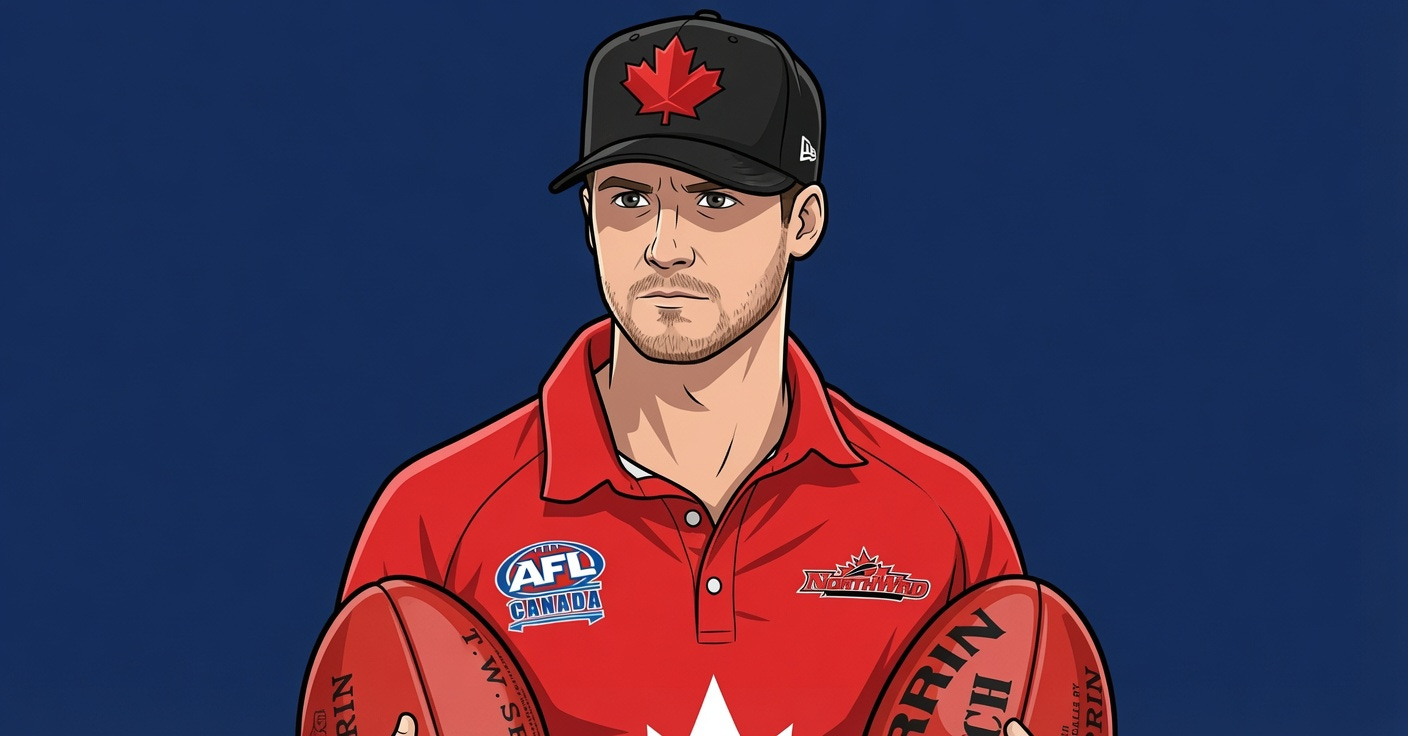
I realized recently that I’ve spent years writing about other coaches’ craft, and done very little to explain my own.
I’m not sure why, but I’ve always found it difficult to write about myself. It’s why I loosely narrate in my books and rarely insert myself into storylines.
Similarly, I’ve struggled to include my voice in this newsletter, where Cody’s Notes tending to be my short bullet-point narration at the end of each post.
As I expand this newsletter and provide more offerings, I’m going to push myself to get uncomfortable and share more of my own story.
To understand me, perhaps a good place to start is to outline what I’m not.
I’m not a psychologist, although I have been called a ‘natural psychologist’ by a prominent practitioner.
I’m not an academic, although I have been called a ‘PhD without the debt’ by a prominent coaching researcher.
I’m not a keynote speaker, although I have been called a ‘welcome change of pace from the motivational nonsense’ by a prominent event organizer.
When I’m asked what I do, or how I’d like to be introduced, I say that I’d like to be called a coach. I’m a coach.
I do recognize, however, that part of the reason for the misunderstanding is that I’m a bit of a different thinker. But there’s a perfectly good explanation for that.
To understand why, you really have to understand two things about me: my upbringing, and my life experience.
Part I - My upbringing
At the core of all of my coaching is the fact that I live and breathe sport to a level that, upon reflection, seems highly abnormal. My identity isn’t so much shaped by obsession with one sport as it is interlinked with the whole sporting industry.
Take some of these parts of my upbringing that have shaped me:
I was born onto the steps of the Australian Institute of Sport, where as a toddler my mother would take me to watch the athletes prepare for the Olympics.
I grew up in the pitlane of V8 Supercars, where at the age of 10 I was able to walk over to former F1 world champion Alan Jones or former MotoGP world champion Wayne Gardiner and ask them questions.
I have an aunt who was Arsenal’s receptionist during the 90s Highbury era, and I have an uncle who is in the Socceroos’ greatest ever XI.
I completed my grade 10 work experience at Hawthorn Football Club, where I got to cut up film, spot the injured players in the gym, and train with the team in the afternoons.
One of my first junior coaches was AFL premiership player Steven Icke, who drip-fed me elements of professionalism even at U13 and U14 level.
There’s a famous line in The Dark Knight Rises where Bane says to Batman, “You merely adopted the dark. I was born in it, molded by it.”
That’s how I feel about sport — I was born into it, molded by it.
It’s most of what I think about every day. It’s all I’ve ever wanted to do. And nothing else has ever come quite so naturally to me.
But on top of my upbringing, I also got extremely lucky. Despite being a highly-talented junior player, I didn’t make it.
That’s the lucky bit — not making it.
Part II - My life experiences
Had I been drafted into the AFL, I would’ve been holding on for dear life. By age 18, my body was already starting to give in, and I probably didn’t have the temperament to carve out a long-term career. While a career as a professional athlete was my singular dream (at the time), my life would’ve taken on a completely different trajectory had I made it.
Instead, I played a couple of seasons of suburban footy with my lifelong best mate. I got a job in the city. I started coaching. I moved overseas. I resolved to push the limits of my own potential.
This added skills and experiences on top of my natural ease within sport:
I worked in HR, so I understand contracts and collective bargaining. I worked in sales, so I understand pitching and persuasion. I worked in technology, so I understand user experience design and agile work methodologies.
When I moved to Toronto, I didn’t know a soul. I just had two suitcases, the money I’d saved, and a resolve to push the limits of my own potential. (Who you become while travelling was actually my first idea for a book, way back in 2013).
While playing suburban footy with my best mate, our assistant coach convinced me to try coaching. He became my coaching mentor, and would spend hours with me at his kitchen table telling me everything he knew.
Our first Under 15 team together included three Top 10 draft picks, and six draftees total. What a group. I was hooked.
That role opened up opportunities to coach senior men, which opened up a national team role, which connected me to the other national teams, which allowed me to start sharing my coaching ideas — including a full circle moment where I spoke at the Australian Institute of Sport, where I’d hung out as a toddler.
Like most coaches, I have worked diligently on my technical knowledge for nearly 20 years. I’ve built my own weighted statistical models. I’ve tinkered with how to physically prepare athletes for the rigors of the game. I’ve obsessed over details like jersey design, how to accelerate teamwork, how to design the perfect training exercise, and what side of the street the bus should arrive on.
But these technical details are built on and fueled by my upbringing and my life experiences.
As Memphis Grizzles head coach Tuomas Iisalo recently pointed out: “Sport is not its own island that is separated from the human experience.” He says that it’s the fact that coaching is such a holistic endeavour that makes it so enjoyable for him, a sentiment that I share.
Part III: The mission to re-humanize coaching
My stated goal is to be a catalyst of the re-humanization of coaching. I’ve chosen this goal not because it’s some noble or virtuous cause that sounds good in the woke era, but because coaching is not separate from the human experience.
Since it cannot be separated from the human experience, it means that your upbringing and your life experiences count as part of your coaching craft.
You may have fallen for the trap of believing only your technical prowess counts in coaching. That’s certainly the message the industry reinforces.
Somewhere along the line we started making coaches spend years sitting in classrooms and writing academic research in order to amass as many qualifications as possible. What became more important was knowing which peer-reviewed paper referenced a certain technique, rather than making coaches better at coaching.
But take some of these examples that I’ve written down over the years:
Sir Alex Ferguson credits owning pubs as being a great grounding for him in human nature, managing unpredictability, and public speaking.
Eddie Jones credits his background as a teacher as being foundational to his pedagogical approach to coaching, and being a substitute PE teacher taught him how to adapt his language to different groups.
Woody Hayes credits his military experience with shaping his ideas of discipline, teamwork, and game strategy. Hayes captained a submarine and a Navy destroyer in active combat during World War II.
Or, consider former Swansea head coach Luke Williams, who was spotted working at Bristol Airport after being sacked by the football club. Asked why he was wearing a high-vis vest and helping passengers reach their gate on time, he said:
“You can learn a lot from anything that you do. It doesn’t have to be in football. It doesn’t have to be in sport. Pushing yourself out of your comfort zone and doing something completely different, meeting new people, listening to what they say and listening to their gripes. I’m working with a lot of people at the moment who have line managers and it’s really interesting to hear the things that they find difficult about how they’re being managed.”
We need licenses. We need minimum standards of ethics and safety. This is undeniable. But the objective is to develop well-rounded people, because well-rounded peopole become well-rounded coaches. And well-rounded coaches are the ones who change players’ lives.
Isn’t that what we’re trying to do?
So if you have an unusual upbringing or a winding career path, or you’ve worked at an airport or in a phone store…I’d urge you to look deeper at how it has fed your coaching craft.
Don’t disregard gaps in your ‘career’ to do other things. Refuse to treat maternity leave as ‘time away from coaching’. Go and take up a traditional ‘craft’ and see what you learn from doing pottery or woodwork.
We cannot develop well-rounded coaches in a classroom. We have to go out into the world and do stuff. Lots of stuff.
I’ve done lots of stuff, and that’s where my craft comes from.